
記事:
奄美大島泥染めリネン Amami Ōshima Mud-Dyed Linen

”泥染め”をご存知ですか?
着物に使われ、黒地に精緻な絣が織り込まれた高級絹織物の大島紬、その染色技法が泥染めです。1,300年以上も前から行われている奄美大島特有の染色技術から生まれる黒は、独特の光沢や風合いになります。この世界に類を見ない染色をご紹介いたします。
Are you familiar with “mud dyeing”?
Mud dyeing is the traditional dyeing technique used for Oshima Tsumugi, a luxurious silk textile known for its deep black ground and exquisitely detailed kasuri patterns.
Practiced for over 1,300 years, this dyeing method is unique to Amami Ōshima.
The black produced through this ancient technique possesses a distinctive depth, subtle luster, and rich texture that can only be achieved through natural materials and time-intensive craftsmanship.
We invite you to discover this truly one-of-a-kind dyeing tradition, found nowhere else in the world.
テンジンファクトリーは、この奄美大島の泥染めを施したリネン製品を順次発表していく予定です。光沢があり、風合いの柔らかく育った唯一無二のリネンをお楽しみください。
Tenjin-factory plans to gradually introduce linen products dyed using the traditional mud dyeing technique of Amami Ōshima.
Please enjoy these one-of-a-kind linen pieces, distinguished by their subtle luster and beautifully softened, well-developed texture.
奄美大島 泥染めの工程
Amami Ōshima Mud Dyeing Process
① テーチ木(シャリンバイ)染め
Dyeing with Tēchi Wood (Sharinbai)


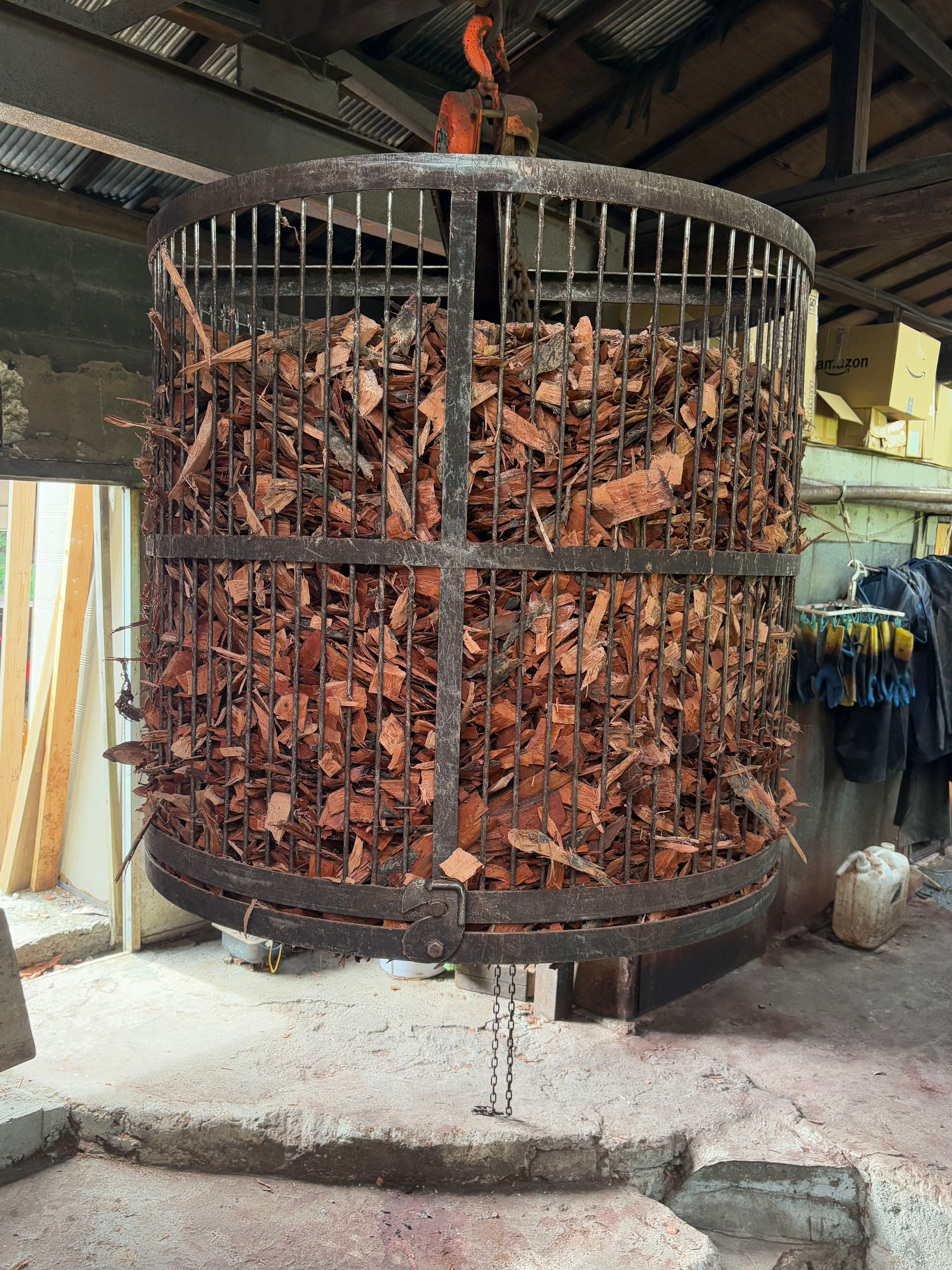
奄美大島に自生するテーチ木(車輪梅)を細かく砕き、煮出して染液を作ります。
糸や布をこの染液に何度も浸すことで、タンニンをしっかりと繊維に含ませます。
この段階では、色は赤みのある茶色になります。
Wood chips from the native Tēchi tree (Sharinbai) are boiled to extract a tannin-rich dye.
Yarn or fabric is repeatedly immersed in this dye so that the fibers absorb the tannins.
At this stage, the color appears as a reddish brown.
② 泥田での泥染め(鉄分との反応)
Mud Dyeing with Iron-Rich Mud


次に、鉄分を多く含む奄美大島特有の泥田に、染めた糸や布を浸します。
テーチ木のタンニンと泥の鉄分が化学反応を起こし、色が一気に濃くなり、
深い茶褐色から黒へと変化します。
The dyed material is then placed into iron-rich mud fields unique to Amami Ōshima.
Here, the tannins react with the iron in the mud, causing the color to deepen dramatically,
changing from brown to deep dark brown or black.
③ 水洗い
Rinsing with Water

泥染めの後は、清水で丁寧に洗い、余分な泥を落とします。
この工程によって、色が定着し、布の表情が落ち着きます。
After mud dyeing, the material is carefully rinsed with clean water to remove excess mud.
This process helps stabilize the color and refine the surface texture.
④ 染めと泥染めを繰り返す
Repeating the Dyeing Cycle


①〜③の工程を何十回も繰り返すことで、
奥行きのある色合いと高い堅牢度(色落ちしにくさ)が生まれます。
この反復作業が、奄美の泥染め特有の「深い黒」を作り出します。
By repeating these steps dozens of times, the color gains depth and excellent durability.
This time-intensive repetition creates the distinctive deep black tones unique to Amami mud dyeing.
⑤ 完成した泥染めの色合い
Finished Mud-Dyed Textiles

テンジンファクトリーで染めた泥染めは、1回染めなので黒ではなく、グレーとなりました。もちろんこれを数十回繰り返して染めると、黒色になります。
1回染めのグレーも光沢があり、風合いも柔らかくなっています。
※写真の左から3番目が泥染をしたリネンのブランケットです。
The mud dyeing carried out at Tenjin Factory was done in a single dyeing process, resulting in a gray color rather than black.
When the process is repeated dozens of times, the color gradually deepens and eventually becomes black.Even with just one round of dyeing, the gray tone already shows a subtle luster, and the texture of the fabric becomes noticeably softer.In the photograph, the third ※ item from the left is the mud-dyed linen blanket
自然の循環に根差したモノ作り
Craftsmanship Rooted in the Cycle of Nature


奄美大島の泥染めは、植物と大地の力を最大限に生かした、世界でも類を見ない天然染色技法です。
Amami Ōshima mud dyeing is a rare natural dyeing technique that fully harnesses the power of plants and the earth.