

Article: Linen & Ironing
Linen & Ironing
“Life is but a tissue of habits.”
— Henri-Frédéric Amiel
If we believe that, we can change our life by changing our habits. And I think that good habits are about having a good routine in our daily life. In this blog, I would like to introduce our products as things to accompany such a good daily routine.
”Is Ironing Linen Really Necessary? "
Linen Care: Thoughts on Ironing
Among the many aspects of linen care, ironing is one topic that often inspires differing opinions. Today, I'd like to share some thoughts on it.
A Fabric That Grows Through Washing
Linen is a fabric designed to be part of everyday life, and one of its greatest qualities is that it can be washed with ease. When new, linen tends to have a firm texture and crisp feel. However, with repeated use and washing, it gradually becomes softer and more supple. We like to describe this process as the fabric “growing” or “maturing” in character.
Even after developing this softer texture over time, freshly washed linen regains a certain crispness and structure, as if it were standing tall with renewed energy. It reminds us of how refreshed and revitalized we feel after a bath. The pleasant sensation of handling freshly washed linen comes from the fabric itself being refreshed and renewed.
The comfort and freshness of newly washed linen is one of the true joys of using it. So don't hesitate—use it often, wash it often, and enjoy watching its character develop over time.


If the garment or fabric is completely dry, lightly mist it with water using a spray bottle before ironing.
2. Use a High Heat Setting (Linen Mode)
If your iron has a “Linen” setting, select that option. If not, a high heat setting is generally suitable for linen.
However, some items may be more delicate or may contain blended fibers that can be damaged by high temperatures. Therefore, always check the care label before ironing.
3. Use a Pressing Cloth
When ironing linen, especially dark-colored linen or natural unbleached linen, it is a good idea to use a pressing cloth.
A pressing cloth helps prevent unwanted shine marks and protects the surface of the fabric while still allowing you to achieve a crisp finish.
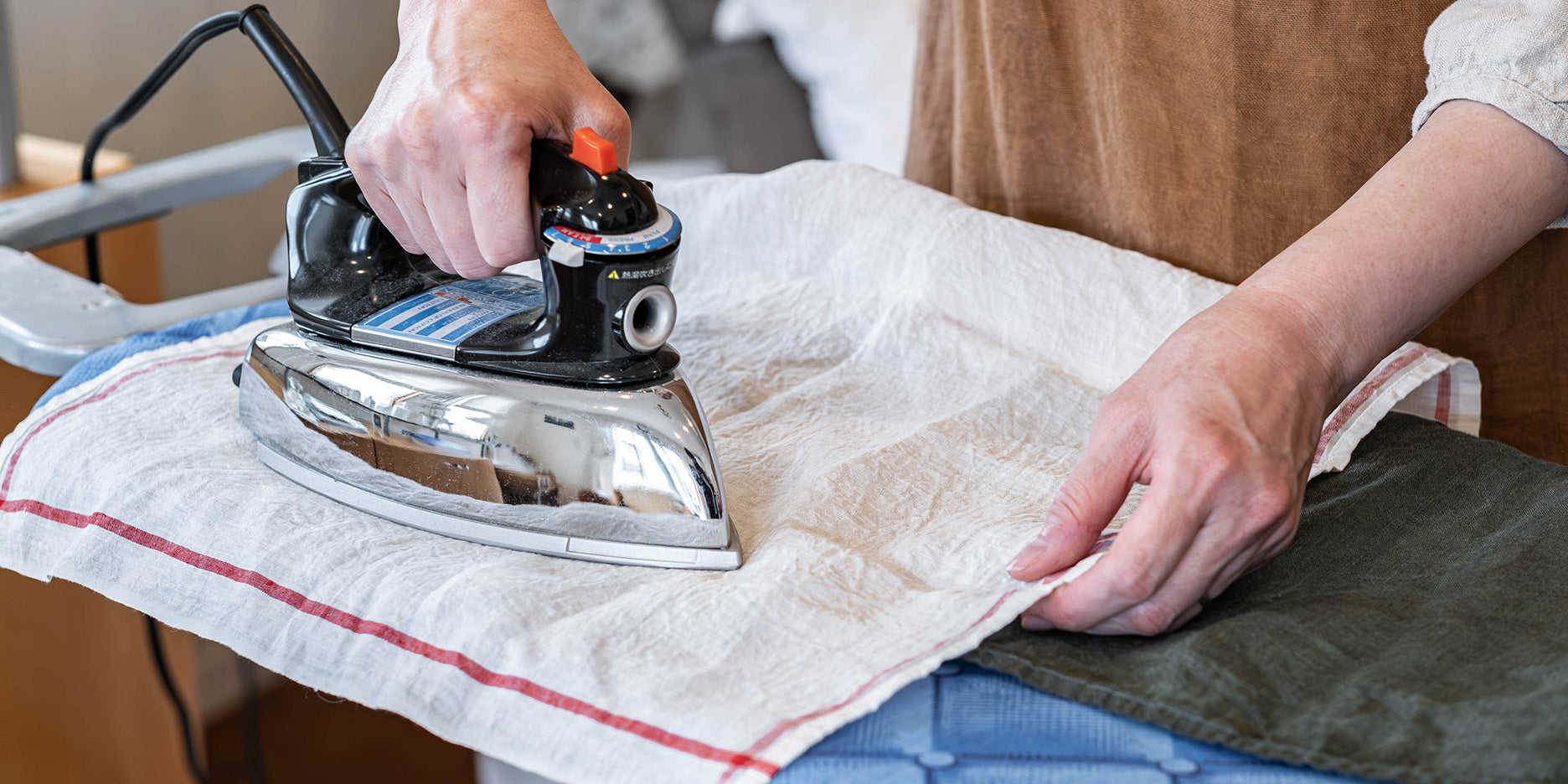
4. Press Rather Than Glide
When ironing linen, think of the process as pressing rather than sliding the iron across the fabric.
Apply the iron firmly to the fabric, lifting and repositioning it as needed. This pressing motion helps smooth wrinkles more effectively and produces a cleaner, more polished result.

Ideally, move the iron in small, controlled motions while applying gentle pressure along the direction of the fibers.
Important Precautions When Ironing Linen
If not done properly, ironing can damage linen by causing unwanted shine, changes in luster, or other alterations to the fabric's appearance. When ironing linen, keep the following points in mind:
1. Avoid Ironing When Completely Dry
Because linen wrinkles can be difficult to remove, medium- to high-temperature ironing is generally recommended. However, ironing linen repeatedly while it is completely dry can cause the fibers to become excessively stiff and brittle.
For best results, avoid ironing linen in a fully dry state. A slight amount of moisture helps protect the fibers and allows wrinkles to release more easily.
2. Do Not Apply the Iron Directly to Embroidery or Printed Areas
Take extra care around embroidered or printed sections.
Applying an iron directly to embroidery or printed designs may cause discoloration, distortion, or even melting of certain materials. To avoid damage, either iron around these areas or use a pressing cloth and iron from the reverse side whenever possible.
Making Ironing Easier – Simple Tricks to Reduce Wrinkles in Linen
Many people feel that ironing every time can be a hassle. If that's the case, reducing the amount of wrinkling in the first place can help minimize the need for ironing altogether.
If you would like to make linen care a little easier, try the following methods:
1. Use a Shorter Spin Cycle
Reducing the spin-drying time during washing can significantly decrease the amount of wrinkling.
In addition, placing linen items in a laundry net before washing can help protect the fabric from excessive twisting and creasing, making this method even more effective.

2. Reshape the Fabric Before Hanging to Dry
Simply taking a moment to smooth out the seams and reshape the item by hand before hanging it to dry can make a noticeable difference in the final result.
By gently straightening the fabric and restoring its original shape while it is still damp, you can reduce the formation of deep wrinkles and achieve a cleaner, more polished appearance with less need for ironing afterward.

Because the spin cycle is shorter, the drying time will be longer than usual. However, the additional moisture adds weight to the fabric, allowing the linen fibers to be gently pulled downward as they dry. This natural tension helps smooth out wrinkles on its own.
3. Refresh the Fabric Using Steam Only
Another option is to use steam without placing the iron directly on the fabric.
Holding a steam iron or garment steamer slightly away from the linen allows the wrinkles to relax while preserving the fabric's natural softness and texture.
If you would like to maintain linen's relaxed, airy character, this method is well worth trying.

4. Take Advantage of Bathroom Steam
Another simple trick is to hang your linen item in the bathroom after taking a shower or bath.
The natural humidity in the room helps relax the fibers, allowing wrinkles to soften and settle without the need for ironing.
What About Tenjin Factory Linen?
The linen products made by Tenjin Factory, a dedicated linen weaving mill, are crafted using carefully selected, high-quality raw materials.
From weaving and dyeing to cutting, sewing, and embroidery, every step of the production process is carried out in Japan in small batches, allowing for meticulous attention to detail and consistent quality.


shuttle

Selvedge Linen Woven on Traditional Shuttle Looms
1. Why We Cut Along the Grain of the Fabric
Fabric woven on traditional shuttle looms is produced under relatively low yarn tension, allowing the material to retain its natural character and texture without being overstressed during the weaving process.
When linen is cut and sewn along the grain of the fabric, it maintains its structural integrity even after repeated washing. Distortion, twisting, and misshaping are minimized, allowing the fabric's original texture and character to remain true over time.
As a result, the garment or textile not only preserves the authentic feel of the linen but also retains its shape and beautiful appearance for years of use.

Cutting the fabric by hand while following a drawn thread to ensure accurate grain alignment.
2. Maintains Its Shape Even Without Ironing
As mentioned above, Tenjin Factory products are cut and sewn carefully along the grain of the fabric.
Because of this, after washing, you can often restore the item's shape simply by smoothing the seams and gently stretching it while it is still slightly damp. Holding the fabric by opposite edges and giving it a light pull is usually enough to help it settle back into shape.
While some natural wrinkles will remain, they tend to be soft and unobtrusive, allowing the linen to retain its relaxed, natural beauty without the need for ironing.

Fast Drying — Another Unique Quality of Linen
3. Wrinkles Help Keep You Cool
One of the reasons linen feels so cool and comfortable is its natural wrinkles.
These gentle wrinkles reduce the amount of fabric that comes into direct contact with the skin, allowing air to circulate more freely between the fabric and the body.
As a result, even in warm or humid conditions, linen is less likely to cling to the skin when you perspire, helping you stay cooler and more comfortable throughout the day.

Enjoy Linen's Fresh, Dry Touch
4. Iron When Necessary
Although linen's natural wrinkles are part of its charm and are generally not bothersome, it is still a natural fiber. Depending on how it is handled, stored, or washed, deeper wrinkles may occasionally develop.
When that happens, don't hesitate to take the time to iron the fabric. A little extra care can quickly restore linen's smooth appearance while preserving its unique character and beauty.

Tenjin Factory's linen towels, aprons, kitchen cloths, blankets, sheets, duvet covers, pillowcases, curtains, and other in-house products are all carefully hand-cut along the grain of the fabric before being sewn into finished products.
This meticulous process helps ensure that they retain their shape and beauty even after years of use, allowing you to enjoy the natural qualities of linen for a long time.

Plant-Dyed Linen Aprons and Kitchen Cloths
 Bed Linen

Linen Towels

Linen Gauze Curtain

We have covered a great deal of ground rather quickly, but that brings us to the end of this article.
Thank you very much for reading to the very end. We hope that Tenjin Factory's linen products can be of value and bring comfort to your daily life.
We will continue sharing the unique qualities and timeless appeal of linen products that are designed to accompany everyday living. We look forward to welcoming you again and thank you for your continued support.

